

Welcome to the 2026 DELTA Teaching Forum!
Date: May 1, 2026, 8:15 a.m. – 5:00 p.m. (EDT)
Location: JHU Homewood Campus with sessions streamed online
A day of presentations, demonstrations, and networking opportunities devoted to the exploration of teaching innovation at Johns Hopkins University. The symposium is intended to provoke conversation, spark new thinking, and advance the ongoing pursuit of teaching excellence.
This event is open to faculty, staff, graduate students, and postdoctoral fellows interested in teaching and learning.
Members of the community and neighboring institutions are welcome to attend as registered guests. Pre-registration is highly encouraged for security purposes; however, limited day-of registration may be available for non–JHU affiliates.
Symposium Schedule & Sessions
Date: May 1, 2026, 8:15 a.m. – 5:00 p.m. (EDT)
Location: JHU Homewood Campus, Bloomberg Student Center (Building 17)
Attending virtually? The Zoom link will be emailed to registered participants the morning of the event.
For technical assistance during the event, contact [email protected]
8:15 a.m. – 9:00 a.m. – Arrival and Registration
The event will take place in the Bloomberg Student Center (Building 17) on Johns Hopkins University’s Homewood campus.
Arrival & Transportation
Check-in begins at 8:15 a.m. in the Bloomberg Student Center. Please arrive early to register before the 9:00 a.m. welcome remarks.
Refreshments
We’ll have coffee, tea, and water available in the morning and lunch will be provided.
Getting Here:
The Homewood-Peabody-JHMI Shuttle stops near Bloomberg. For schedules, use the TransLoc app or visit JHU Transportation Services website. MTA bus routes also serve the area; see the MTA website for details.
Driving: Parking is available in the San Martin Garage and the South Garage:
- San Martin Garage: approximately 10–12 minute walk
- South Garage: approximately 5 minute walk
If using Google Maps or another wayfinding app, we recommend selecting a route that avoids stairs. You may also consult the university’s accessible campus map.
Accessible entrances and elevators are available throughout Bloomberg Student Center. While all entrances are accessible, for ease of wayfinding we recommend using the Charles Street entrance at Charles St. and 33rd St.
Upon arrival: Enter through the Charles Street entrance, check in at registration, and a team member will direct you to your session. The Charles Street entrance also serves as the primary visitor/guest entrance, where you will be greeted by a member of our reservations team upon arrival. We look forward to welcoming you.
9:00 a.m. – 10:15 a.m. – Opening Remarks and Keynote Address with President Joseph E. Aoun
Keeping Humanity in the Driver’s Seat: Reimagining Education in the Age of AI
Bloomberg Student Center 210AB
AI is reshaping every dimension of the world we live in. This makes the mission of higher education more essential than ever—but only if we can reinvent higher education to embrace this opportunity. This conversation will explore how faculty, students, administrators, policymakers, and industry can work together to ensure that humans remain the primary authors of our collective future.
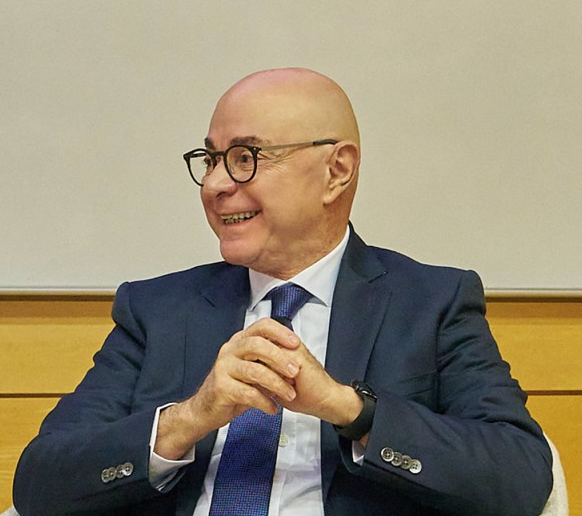
Joseph E. Aoun is the seventh President of Northeastern University. A preeminent voice on the value of higher education, President Aoun has led the global expansion of Northeastern, launching a university system spanning 14 campuses across North America and the UK, and extending its signature co-op program through experiential learning opportunities in more than 140 countries. During his tenure, the University has increased external research funding six-fold and hired more than 800 tenure and tenure-track faculty.
He is the author of numerous articles and books, including Robot-Proof: Higher Education in the Age of Artificial Intelligence (MIT Press, 2017, 2024). In it, he lays out a blueprint for colleges and universities to meet the challenges and opportunities associated with the transformative effects of artificial intelligence.
President Aoun received his Ph.D. from the Massachusetts Institute of Technology and advanced degrees from the University of Paris VIII (France) and Saint Joseph University (Beirut, Lebanon). He was named a Chevalier of the Legion of Honor and a Chevalier dans l’Ordre des Palmes Academiques by the French government, and is a recipient of the Carnegie Corporation of New York’s Academic Leadership Award. He is a member of the American Academy of Arts and Sciences, a fellow of the American Association for the Advancement of Science, and a past Chair of the American Council on Education.
10:30 a.m. – 11:30 a.m. – Concurrent Sessions 1
Designing Classrooms Where Every Voice Matters: Liberating Structures for Inclusive and Engaged Learning
Bloomberg Student Center 204B (1 hour)
[No recording for this session]
Presenter: Adriano Pianesi, MBA, Lecturer (CBS)
Active learning research shows that students learn more effectively when they actively engage with ideas and each other. This interactive session demonstrates practical facilitation strategies that help instructors activate participation, encourage inclusive dialogue, and deepen reflection in classrooms. Participants will experience simple collaborative learning structures they can immediately apply in lectures, seminars, and hybrid teaching environments to create more engaging and participatory learning experiences.
(AI Track) Navigating the AI Integration Challenge: A Journey from Uncertainty to Action
Bloomberg Student Center 213 (30 mins.)
Presenters: Shawna Mudd, DNP, MBA, Associate Professor (SoN); Jeanne Moore, DNP, MSN, Associate Professor (SoN)
Faculty face urgent pressure to integrate generative AI within the curriculum. At the SON, faculty held competing views—balancing integrity and equity concerns, practice-preparation priorities, and ethical concerns—making simple policy and acceptable use criteria inadequate. A diverse 10-member team joined the AAC&U Institute on AI, Pedagogy, and the Curriculum and selected an AI literacy framework, adapted an acceptable AI use framework for integration in courses and syllabi, and developed phased plans for literacy development for faculty, staff, and students, planned integration into courses, and ongoing feedback and evaluation.
Designing Courses in an AI Era: Learning Goals, Assignments, and AI Literacy
Bloomberg Student Center 213 (30 mins.)
Presenters: Emily Braley, PhD, Assistant Dean & Teaching Professor (KSAS); Anne-Elizabeth Brodsky, PhD, Associate Teaching Professor (KSAS); Aliza Watters, PhD, Associate Dean & Senior Lecturer (KSAS)
This workshop introduces a framework developed in the Krieger School of Arts and Sciences as a way for faculty and students to think about AI within the Foundational Abilities – abilities not just for academic success, but for ethical leadership, civic responsibility, and adaptability. Looking at a sample assignment, we’ll analyze, discuss, and pressure-test this example to uncover how it functions within the context of AI. More broadly, we’ll consider how this framework can support student learning across the curriculum.
Meeting Students Where They Are: Pedagogy For An Anxious Generation
Bloomberg Student Center 204A (1 hour)
Presenters: Alison Papadakis, PhD, Teaching Professor (KSAS); Carl Dupont, DMA, Associate Professor (Peabody); Gagan Garg, PhD, Associate Teaching Professor (WSE)
Today’s students are navigating a world shaped by three converging forces: the COVID-19 pandemic, the rapid rise of AI, and sweeping sociopolitical changes. These shifts have altered how students learn, how they relate to faculty, and how they envision their futures. This panel brings together faculty from Psychological and Brain Sciences, Music and Computer Science to explore what it means to meet students where they are. This is not about lowering the bar but about attending to their full humanity while holding high academic standards. Panelists and participants will explore these questions together, not as audience and experts, but as a community of practitioners.
11:45 a.m. – 12:45 p.m. – Peabody Plenary Performance
Jazz & Democracy: Improvisation as a Model for Learning and Collective Action
Bloomberg Student Center 210AB
In this interactive performance-workshop, internationally renowned trumpeter and jazz educator, Sean Jones, explores how the collaborative practices of jazz provide a powerful framework for teaching, leadership, and learning in the modern era. Through live improvisation and guided reflection, participants will experience how jazz musicians engage in a sonic democratic process, where listening, trust, and shared purpose allow creativity to flourish. This balance of individual expression with common purpose allows musicians to achieve something greater than any one voice alone. Attendees will leave with practical pedagogical strategies inspired by jazz, from quick “musical dialogue” warm-ups that build collaboration to classroom norms that support diverse perspectives and shared leadership.
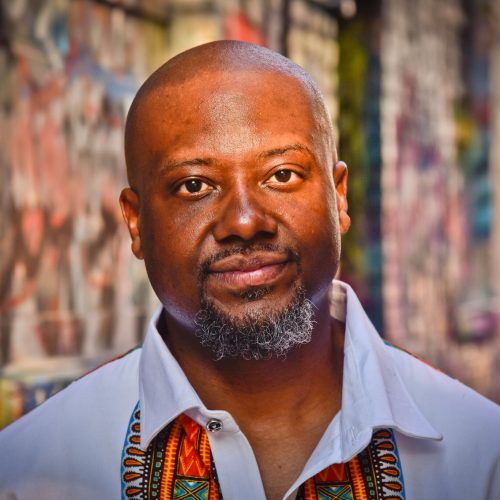
Sean Jones is a celebrated trumpeter, composer, and educator whose career has spanned artistic leadership roles including the Artistic Director of the Sean Jones Quartet, former Lead Trumpeter of the Jazz at Lincoln Center Orchestra, and performances with luminaries such as Marcus Miller, Tia Fuller, and Nancy Wilson. A passionate advocate for music as a vehicle for social connection and human expression, he currently serves as Chair of Jazz at the Peabody Institute of Johns Hopkins University, where he leads a program dedicated to cultivating creativity, equity, and community through the art of jazz.

Professor Jones will be accompanied by Peabody Jazz Department students and Richard Johnson, an Associate Professor of Jazz at Peabody. Richard Johnson has cultivated a rich and pedigreed musical background, being schooled by some of the most legendary jazz musicians and studying at the most esteemed institutions of music. After receiving a scholarship and graduating from the Berklee School of Music in just two years, Johnson earned a master’s degree in jazz pedagogy from the Boston Conservatory. He then went on to receive an Artist Performance Diploma at the Thelonious Monk Institute of Jazz Performance at the New England Conservatory under the direction of the influential Ron Carter. Johnson currently serves as an associate professor at Peabody.
12:45 p.m. – 1:45 p.m. – Lunch
Lunch, Connection, and Exploration
Bloomberg Student Center 403/404
During lunch, we invite you to take advantage of this unstructured hour to pause, reflect, and recharge. It’s a great opportunity to revisit session insights, reconnect with colleagues—both new and familiar—and continue conversations in a more relaxed setting.
Feel free to explore all four floors of the Bloomberg Student Center, visit one of the food vendors downstairs, or simply take in the building’s striking architecture.
Lunch will be provided by 1876 Distinction Catering and will feature dietary-friendly boxed meals.
For those interested in the building’s sustainability efforts or dining offerings, you can learn more here:
1:45 p.m. – 2:45 p.m. – Concurrent Sessions 2
Scaling Teaching Excellence: Open, Customizable Teaching Development Modules
Bloomberg Student Center 204B (30 mins.) 1:45p.m.
Presenters: Kelly Clark, MS, Teaching Academy Director (KSAS); Beth Hals, MEd, Senior Instructional Technologist (KSAS); Charlee Dulaney, MS, Senior Instructional Technologist (KSAS)
This session shares an update on Johns Hopkins University’s initiative to develop flexible, customizable teaching development modules that support effective teaching. Originally designed as asynchronous Canvas Commons resources for internal use, the modules are now publicly available through JHU’s Public Canvas site as Open Educational Resources (OER), expanding access beyond the institution. Participants will see how the modules support course design, assessment, and active learning grounded in Universal Design for Learning (UDL). The session will highlight the collaborative development process and demonstrate how openly accessible modules can support scalable professional development for instructors across institutions and teaching contexts.
Making Science Meaningful: Creative Communication in Place‑Based Learning
Bloomberg Student Center 204B (30 mins.) 2:15p.m.
Presenters: Rebecca Wilbanks, PhD, Lecturer (KSAS); Sunita Thyagarajan, PhD, Associate Teaching Professor (KSAS)
Communicating scientific content to public audiences and non-expert stakeholders is a key skill for researchers but one in which training often lags, particularly in undergraduate curricula. We share our experience co-teaching a new class focused on this competency. We designed authentic writing assignments through place-based course design, asking students to produce an original podcast featuring research relevant to the local community (alongside other creative assignments such as op-eds and infographics). We reflect on our pilot semester and share a set of guided questions for audience members to think through strategies for designing meaningful writing assignments appropriate to their course.
(AI Track) Design Your Own Course Chatbot
Bloomberg Student Center 213 (1 hour)
Presenters: Jennifer Stawasz, MS, Instructional Designer (SAIS); David Serna, MEd, Instructional Technologist (SAIS)
Students are already using AI tools, but instructors can go a step further by creating custom chatbots designed specifically for their courses. This interactive session showcases real examples developed by faculty at Johns Hopkins University and introduces practical strategies for designing course chatbots that guide students through complex concepts, clarify assignments, and reinforce course expectations. Participants will take part in a short workshop to begin creating their own chatbot using free, no-code tools and will leave with ideas for integrating this emerging teaching approach into their courses.
What Makes a Good Dissertation? PhD Education and Clear Expectations
Bloomberg Student Center 204A (1 hour)
Presenters: Sabine Stanley, PhD, Vice Provost & Bloomberg Distinguished Professor (Provost’s Office); Stephanie Brehm, PhD, Director of Graduate Education (Provost’s Office)
PhD education has often been described as hoop-jumping, hazing, etc. One reason – a lack of clear expectations for the components of a PhD degree: dissertation. How should we assess independent research, such as dissertations? Are there ways to utilize existing assessment tools, like rubrics, to provide clear expectations at a PhD program-level to students and faculty? What curricular scaffolds can we put in place that can become best practice across PhD education? How can we make the dissertation completion process more transparent to students and faculty, present these expectations early on, and build a culture of clarity in PhD education?
3:00 p.m. – 4:00 p.m. – Deans’ Panel
Bloomberg Student Center 210AB
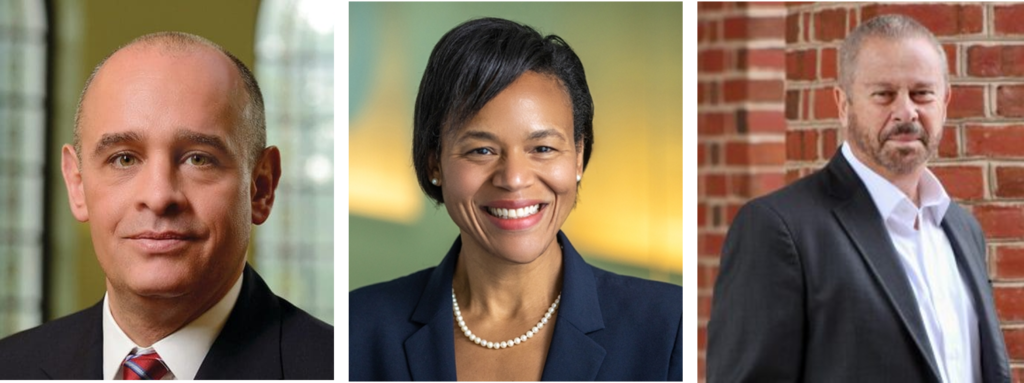
Deans Celenza, Pollack Porter, and Schlesinger will discuss their perspectives on the future of teaching and learning in higher education. The session will be moderated by Executive Vice Provost Stephen Gange with opportunities for audience Q&A.
4:00 p.m. – 5:00 p.m. – Concurrent Sessions 3
Standardizing Graduate Course Management to Enhance Consistency, Efficiency, and Support
Bloomberg Student Center 204B (30 mins.)
Presenters: Lindsay Ledebur, MA, Instructional Design Manager (SoM); Rachel Lajoie MSc, Academic Operations Officer (SoM); Nicole Taylor, MEd, Instructional Designer (SoM); Arhonda Gogos, PhD, Director of Academic Affairs and Innovation (SoM)
Graduate programs at the Johns Hopkins School of Medicine historically managed courses independently, resulting in inconsistent use and administration of educational tools, syllabi, and course evaluations. This session will describe the development and implementation of standardized resources and processes, including Canvas course readiness guidelines, a common syllabus template, a Canvas resource community, and a unified course evaluation process. We will highlight how these efforts improved consistency for students and instructors while enabling streamlined support and improved data insights. Presenters will also share logistical challenges encountered, strategies used to address them, and opportunities for future process improvements.
REACTS: Real-time Empirical Analytics of Classroom Teaching in STEM
Bloomberg Student Center 204B (30 mins.)
Presenters: Mark Spindler, MS, Teaching & Training Specialist (WSE)
This 30-minute demo introduces REACTS, a nascent classroom observation tool based on the widely accepted and validated Classroom Observation Protocol for Undergraduate STEM (COPUS) from CU Boulder. An early version of this new, digital REACTS tool, being developed by Teaching & Training Specialists at Johns Hopkins University, will be presented. Participants will utilize REACTS for observing and recording session activities in a live observation. The session includes an overview of action categories, real-time engagement, data analytics, and potential applications of the tool.
Flash Talks
Bloomberg Student Center 204A (1 hour)
Flash talks are a series of 15-minute talks covering the topics below.
- Lucas Buccafusca, PhD, Lecturer (WSE) – Insights, Challenges, and Continuous Improvement: Lessons Learned Developing an Innovation – Centric STEM Capstone Course
- Kisi Bohn, PhD, Assistant Research Professor (KSAS); Nikita Finger, PhD, Postdoctoral Fellow (KSAS); Andrew Gallup, PhD, Teaching Professor (KSAS) – Honing STEM Writing Through a Course-Based Undergraduate Research Experience (CURE) Model
- Nusaybah Abu-Mulaweh, PhD, Senior Lecturer (WSE); Brianna Ha, BS (at 2026 Commencement!), Research Assistant (WSE); Constanza Miranda, PhD, Associate Teaching Professor (WSE) – Learning Analytics in a Gateway Engineering Course: Lessons Learned
2024 Provost’s DELTA Teaching Symposium
2023 Provost’s DELTA Teaching Symposium
2022 Provost’s DELTA Teaching Symposium
2021 Provost’s DELTA Teaching Symposium
2020 Provost’s DELTA Teaching Symposium
Acknowledgements
- Dr. Lainie Rutkow, Acting Interim Provost, Johns Hopkins University; Professor of Health Policy and Management (Johns Hopkins Bloomberg School of Public Health and the Johns Hopkins School of Advanced International Studies)
- Dr. Stephen Gange, Executive Vice Provost, Academic Affairs; Professor (Bloomberg School of Public Health)
The DELTA Forum Organizing Committee
- Chadia Abras, Director, Institutional Assessment (Provost’s Office)
- Danielle Armentrout, Director, Multimedia, Center for Media & Technology Solutions (Whiting School of Engineering)
- Brad Aumiller, Media Systems Manager, Center for Media & Technology Solutions (Whiting School of Engineering)
- Elizabeth N. Bonilla, Media Production Manager, Center for Media & Technology Solutions (Whiting School of Engineering)
- Ellen Bonta, Executive Assistant (Provost’s Office)
- Caroline Egan, Program Manager, Center for Teaching Excellence and Innovation (Krieger School of Arts and Sciences)
- Nathan Graham, Assistant Dean, Center for Media & Technology Solutions (Whiting School of Engineering)
- Joanne Hélouvry, Academic Liaison (Sheridan Libraries)
- Robert Kearns, Director of Online Education (School of Medicine)
- Haley Knapp, Events Coordinator, Center for Teaching Excellence and Innovation (Krieger School of Arts and Sciences)
- Olysha Magruder, Interim Assistant Dean, Center for Learning Design & Technology (Whiting School of Engineering)
- Tammy McClain-Smith, Executive Director, Educational Technology and Design (School of Advanced International Studies)
- Joseph Montcalmo, Director, Learning Innovations (Peabody Institute)
- Kelly Orr, Director of Technology, Center for Media & Technology Solutions (Whiting School of Engineering)
- Amy Pinkerton, Sr. Instructional Designer, Center for Teaching and Learning (Bloomberg School of Public Health)
- Michael J. Reese, Jr., Associate Dean, Center for Teaching Excellence and Innovation; Associate Teaching Professor, Sociology (Krieger School of Arts and Sciences)
- Mark Trexler, Assistant Professor, Counseling and Educational Studies (School of Education)
- Sean Tackett, Associate Professor, General Internal Medicine (School of Medicine)
- Charles Wachira, Senior Director, Teaching & Learning (Carey Business School)
We encourage you to read more about the DELTA Initiative and past grantees.
Last updated 5/18/26